
What if you already have it all?
A few weeks ago, a dear friend sat across from me over coffee — defeated, stretched thin, running on empty — and said something that stuck with me.
"We just can't have it all. I think we need to stop pretending we can."
She wasn't being cynical. She was being honest about how hard it all felt. And I understood. I really did.
AND I disagreed. I still do.
We've been sold a version of "having it all" that was never real. The biggest title. The highest salary. The Instagram-worthy home. The perfectly present mother who never misses a single thing AND the high-powered career that commands a room.
That version is a fallacy. And chasing it will break you.
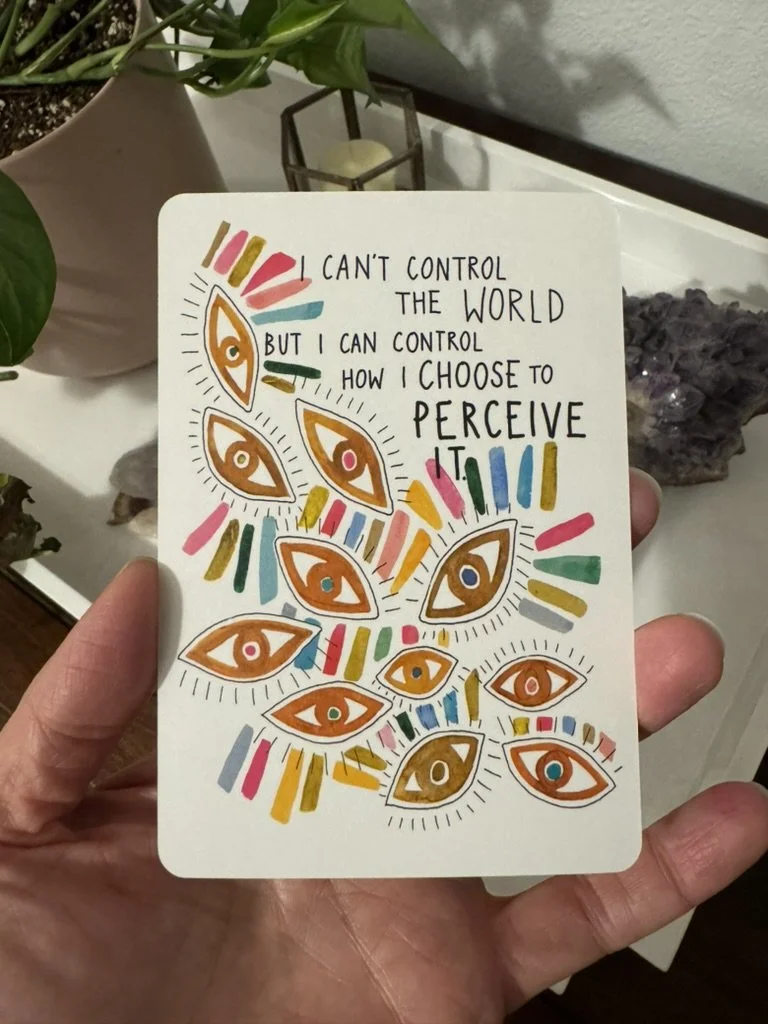
But what if we reframed it?
What if instead of asking "do I have it all?" we asked "what if I already do?"
What if having it all isn't something you chase — it's something you claim?
My dad was a geologist. A scientist. A man of evidence and logic and quiet, steady love. And at the very end of his life — in the final days, when we were sitting together and the world had gotten very small and very still — he said something I will never forget.
"Why me?"
And before I could respond, I realized he didn't mean it the way you'd expect. He wasn't asking why he'd gotten sick. Why he was the one leaving. He was looking at me — his daughter, sitting beside him — and he was asking: how did I get so lucky? How did I end up with this beautiful life?
In the hardest moment, he chose to see everything he had.
That's the reframe. That's all of it, right there.
I think about that a lot — especially as women, especially as mothers. We carry so much. We juggle ALL. THE. THINGS. And somewhere along the way, the juggling started to feel like a burden instead of what it actually is: a privilege.
How lucky are we — our generation of women — to have the choice of what to juggle? To be able to ask what do I want my life to look like? and actually answer it.
That question used to paralyze me. Now it anchors me.
I read The Psychology of Money by Morgan Housel right around the time I was about to make the scariest professional decision of my life — leaving a good job, a stable paycheck, and a clear career path to start over with something that felt more like me. I was terrified. And I knew I was ready.
The idea that cracked something open: the highest form of wealth is the ability to wake up every morning and say I can do whatever I want today. Not a number in a bank account. Not a title. Autonomy. The freedom to choose how you spend your days.
I once heard Cynt Marshall talk about crystal balls and rubber balls — the idea that some things in life, if you drop them, shatter. Others bounce back. The crystal balls are your non-negotiables. Mine are my family, my faith in the work I do, and the overscheduled but wildly fulfilling life I've chosen to live.
So yes — I now choose to drop my kids at school most mornings. To be home when the bus pulls up at 4:45. To do work that connects to something I actually believe in, even when it means I'm not chasing the biggest paycheck or the most prestigious title. I could have taken bigger roles. More money. More visibility. I leapt away from all of that — not because it was easy, but because I knew what my crystal balls were.
Those aren't sacrifices. They're the whole point.
I used to carry mom guilt like a second job.
When my kids were babies and I went back to work, there was this quiet voice that whispered: you should be here. You're missing it. What kind of mother chooses this kind of career?
And then one day I reframed it. Not with a self-help mantra, but with a real question: what example am I setting?
Not just for my daughter — for my son too. I want Owen to grow up watching a woman who loves her work, who leads with her whole heart, who has a partnership with his dad built on balance and mutual respect. I want Vivian to see that ambition and warmth aren't opposites. That you can build something and still be present. That a career isn't something that takes you away from your family — it can be something you bring your family into.
The mom guilt didn't disappear overnight. But once I reframed it, it loosened its grip.
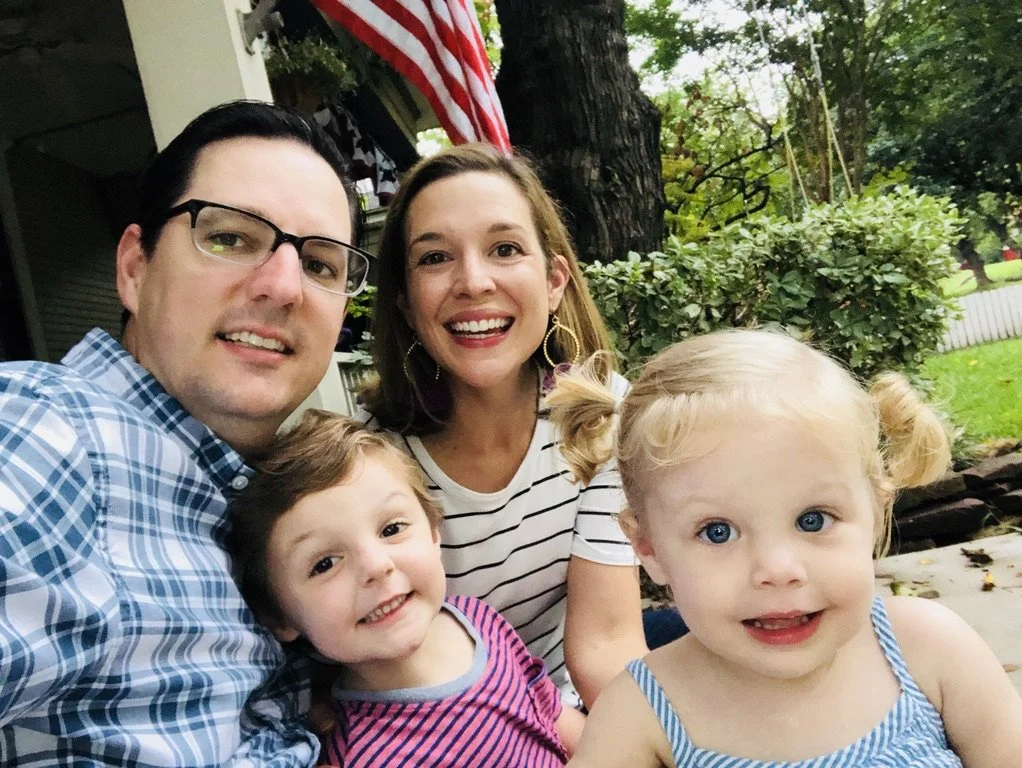
This photo is from the morning of a First Day of School — back in my early days of being a working momma. I'd already been up for two hours. Breakfasts made. Lunches packed. Kids dressed and ready. The invisible work before the work. About to do school drop off and clock into the agency by 8:29:59.
And I remember thinking: how lucky am I?
Owen was around six or seven years old. We were at the dinner table talking about Ukraine — trying to explain to our kids, in age-appropriate terms, what was happening and why it mattered. It was one of those heavy conversations you have as parents and you're never quite sure how much lands.
In the middle of it, Owen got up from his seat. Abruptly. Before I could say anything, he came back.
He was carrying three jars.
We'd been teaching him about money since he was five — a dollar a week in allowance, divided into three jars: save, spend, give. Always in quarters. Literal quarters, dropping one by one into the slots.
He set all three jars on the table, dumped them out, and said he wanted to give his money to the kids in Ukraine.
Jim and I looked at each other. Trying not to cry.
We told him we'd match whatever he had. We gave together to the International Rescue Committee. And I sat there thinking — this is it. This is the whole thing. This is what we're doing it all for.
It wasn't a big number. In grown-up terms, it was almost nothing. But for Owen, it was literally everything he had. He gave up a new toy. He gave up ice cream. He gave up every quarter he'd dropped into those jars for months. He did it without hesitating.
That didn't come from nowhere. It came from the dinner table. From years of conversations and jars and quarters and choices — small, unglamorous, repetitive choices that added up to something.
That's having it all.
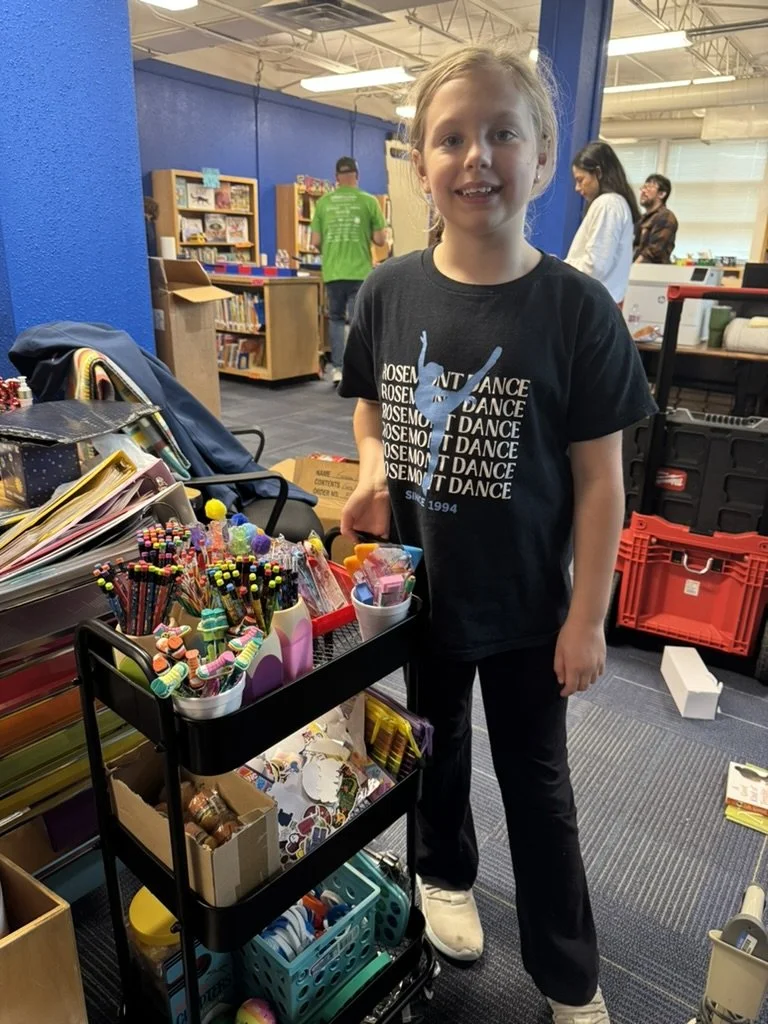
A couple of Saturdays ago, I took my daughter Vivian to a Community Campus Day with United to Learn — a school library glow-up for a school that hadn't had a librarian in over seven years. We spent the morning pulling apart a workroom, sorting through years of accumulated everything, making sense of the chaos. Vivian organized a student incentive cart for 45 minutes and didn't want to leave when it was time for piano.
On the drive home, I told her that sometimes I choose to give my Saturday to a school like that one instead of hers — because her school already has so much love and support, and other kids deserve that too.
She got it.
I don't know if she'll remember that conversation. But I think she felt something shift. And I know I did.
Having it all isn't a destination. It's not a salary milestone or a job title or a season of life when everything finally lines up perfectly. It's a decision. A reframe. A choice you make about what enough looks like — and then the daily work of living inside that choice without apologizing for it.
Some days I get it right. Some days I'm scattered and overwhelmed, eating M&Ms straight from the freezer at 6pm or feeding my kids Cheerios for dinner. Most days are somewhere in the middle.
But I genuinely, deeply, in my bones believe: I have it all.
And I decided that.
To every woman carrying more than she lets on — you're not behind. You're not failing. Look at everything you're holding.
That's not a burden. That's a life. 🤍
Emily Sanford is CMO at Sunny, a nonprofit dedicated to building a more connected world. She also writes at A Glittering, where she explores the intersection of career, creativity, and what it actually means to lead with heart. Follow along on Substack.